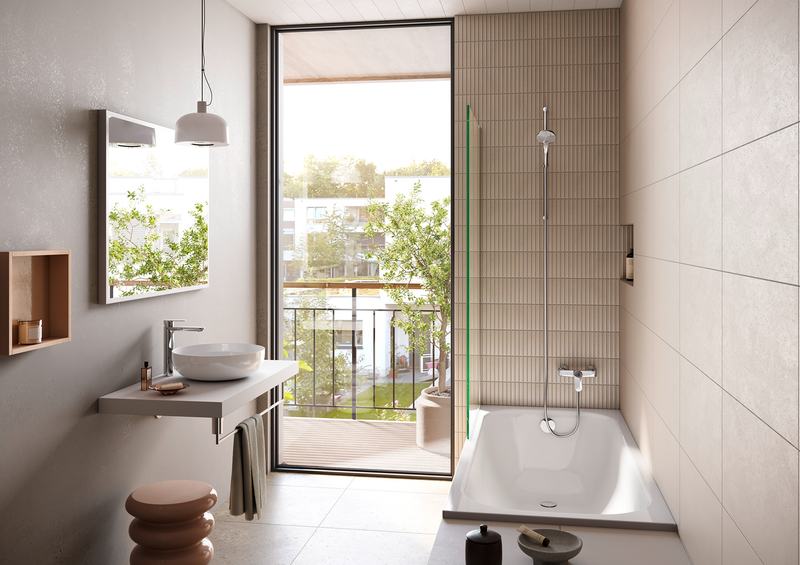
Soundproofing is more than a standard#
Bathrooms generate different types of noise that can spread to neighbouring rooms through the air and building components. While airborne sound is transmitted directly through the air, structure-borne sound is caused by vibrations that travel through walls, floors and fixings. Rigid connections to the building structure in particular can amplify noise transmission. Effective soundproofing therefore starts at the planning and installation stage.
The SIA 181 ‘Soundproofing in Building Construction’ standard defines the requirements that planning and installation must meet in Switzerland.
SIA 181 explained in brief#
The Swiss SIA 181:2020 standard governs soundproofing in building construction. It defines how much noise may be transmitted between different units of use, including noise from sanitary installations.
The standard distinguishes between three requirement levels:
- Minimum requirements
These prevent significant noise disturbance and apply to all new builds and conversions, including rental properties and conversions of owner-occupied apartments. - Enhanced requirements
These provide a higher level of residential comfort and apply, among other things, to newly built owner-occupied apartments as well as semi-detached and terraced houses. Careful planning and tested installation solutions are particularly important in these cases. - Special requirements
These apply where there are specific soundproofing needs or special types of use.
The completed installation is always decisive: the product, installation system and professional installation must be acoustically coordinated.
Which types of noise does SIA 181 assess?#
Bathrooms generate both operating noise and user-generated noise. Operating noise is caused by sanitary installations in use, for example by running water, flushing a toilet or the pumps and jets of a whirl system. User-generated noise, by contrast, results from use – for example when objects are put down or a bottle of shower gel falls into the bathtub.
For acoustic assessment, these types of noise are also classified according to how long and how frequently they occur: as short-duration noise and continuous noise.
Short-duration noise occurs only briefly, for example when filling or emptying a bathtub, taking a shower or flushing a toilet.
Continuous noise lasts for a longer period or occurs regularly. In the sanitary sector, this applies in particular to the operation of a whirl system, whose pumps and jets generate continuous noise and vibrations. Whirl systems therefore place enhanced requirements on planning and installation.
Installation makes the difference#
An acoustically effective installation starts with the fitting process. Direct connections between the sanitary product and the building structure can transmit structure-borne sound and should therefore be avoided.
Typical structure-borne sound bridges can be caused by:
- rigid connections to the building structure, for example when using Nivo anchors
- masonry supports
- filling with sand or cement
- direct contact between mortar and the enamelled surface
The following are therefore particularly important:
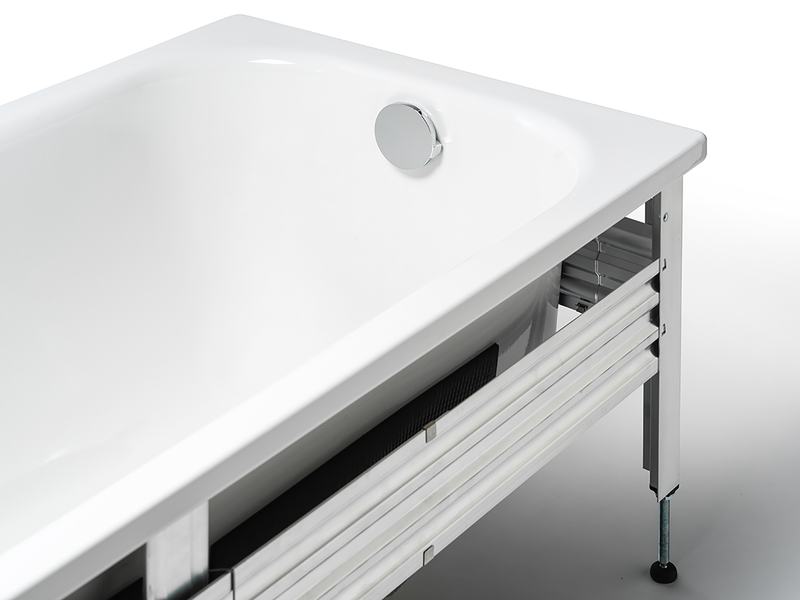
- Decoupled installation: Permanently elastic cushioning reduces the transmission of vibrations and prevents structure-borne sound bridges.
- Suitable installation systems: Acoustically tested installation systems help to ensure reliable compliance with the required values.
- Careful detailing: Connections and fixings must also be installed professionally, as even small weak points can affect noise transmission.
Enhanced requirements for whirl baths#
Whirl baths offer additional comfort, but their blowers and pumps as well as air and water jets also generate additional vibrations and operating noise. A tested complete system comprising the whirl bath and installation system reliably meets the acoustic requirements. Early planning is particularly important in apartment buildings, hotels and buildings with enhanced soundproofing requirements.
Schmidlin HYDRO SILK, AQUA SILENT and SILENT whirl systems are suitable for construction projects with enhanced soundproofing requirements – for example newly built owner-occupied apartments as well as semi-detached and terraced houses.
Plan soundproofing correctly – before installation begins#
The following points help to prevent problems later on:
1. Which soundproofing requirements apply to the construction project?
Different requirements apply depending on the building type and use.
2. Has the appropriate installation system been specified?
The product, support element and installation situation should be acoustically coordinated.
3. Are all contact points with the building structure acoustically decoupled?
Pipes, fittings, connections and fixings can also transmit sound.
4. Is the installation carried out professionally?
Even acoustically tested systems only work if installed correctly in accordance with the manufacturer’s instructions.
Tested under real-life conditions in the construction lab#
To ensure that products and installation systems meet real-world requirements, they undergo comprehensive testing in the Schmidlin construction lab. The certified installation and measuring rooms complying with DIN 52 210 enable extensive acoustic testing and support the development of new solutions.
External companies can also use the construction lab for tests and measurements. In our specialist seminars for plumbers, architects and planners, our experts also demonstrate the acoustic effects of different installation methods and how the requirements of SIA 181 can be implemented professionally in practice.
Conclusion
Soundproofing that delivers
Conclusion: Compliance with SIA 181 depends not only on the product used, but on the installation as a whole. Suitable products, tested installation systems and professional installation provide the basis for effective, long-lasting soundproofing – and therefore greater comfort in everyday life.