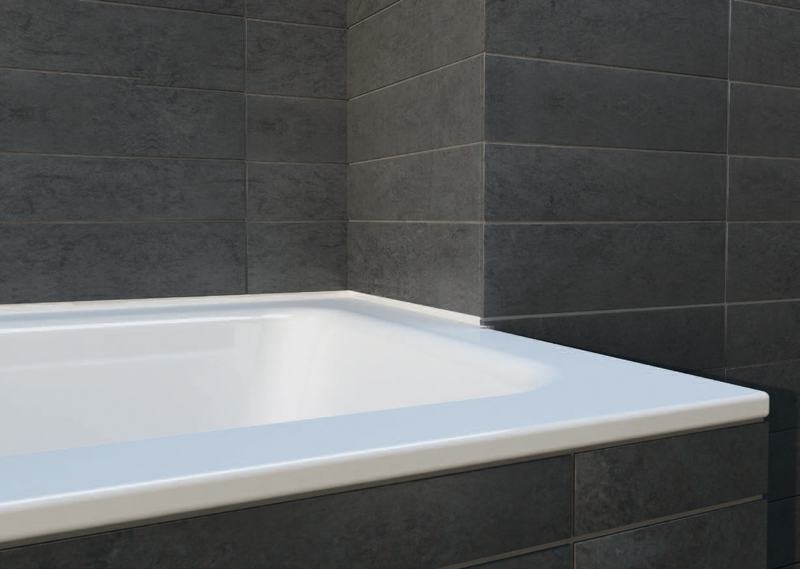
When a bathtub, shower tray or shower area is installed against a wall, the transition between the rim of the tub and the wall must be reliably sealed. Traditionally, a silicone joint is used for this purpose. Schmidlin offers a durable alternative: the steel tile flange.
The steel tile flange is a 30 mm high, seamlessly enamelled upstand formed on the rim of the tub. It is added to the sides that adjoin a wall. This allows the bathtub or shower tray to extend beneath the wall tiles, eliminating the need for a silicone joint at the wall connection.

Depending on the installation situation – against a wall, in a corner or in a recess – tile flanges are available on one, two or three sides. Shower trays and shower areas can also be fitted with tile flanges on all four sides.
Schmidlin offers additional options for special installation situations. Partial tile flanges are made to measure from a drawing and can be positioned at any point. A tile flange shortened by 20 mm is also available for corner and recess installations. This allows the front to be neatly tiled while maintaining the clean lines of the wall tiles.
Watertight down to the last detail#
The secret of a permanently watertight wall connection lies in the well-considered interplay of the individual components. Schmidlin sealing tape reliably connects the steel tile flange to the wall waterproofing, while the matching tile flange mounting brackets hold the bathtub or shower tray securely in position. Additional sealing strips also protect the area around the mounting brackets.
The wall tiles overlap the 30 mm high tile flange by 15 mm. This keeps the sealed transition protected behind the wall covering. All that remains visible is a clean, elegant connection between the tub and the wall – permanently watertight and free of silicone joints.
The ideal version for each bathroom depends on a range of structural and design factors. The Schmidlin field sales team is always available to support planners and installers in selecting, planning and professionally implementing the right tile flange solution.
The benefits: hygienic, safe and maintenance-free#
The Schmidlin steel tile flange combines clean design with outstanding functionality. Its key benefits are:
• Hygienic
The enamelled surface gives dirt, germs and bacteria little to cling to. It is robust, easy to clean and remains hygienic over the long term.
• Safe
The overlapping construction permanently protects the sensitive transition between the tub and the wall against water ingress, reducing the risk of costly water damage.
• Optimum protection against cutting damage
The robust steel tile flange protects the waterproofing by design. Unlike concealed sealing tape, it cannot be accidentally cut through with a utility knife during routine work.
• Maintenance-free
Unlike a silicone joint, the steel tile flange does not become porous and does not need to be replaced regularly. Schmidlin provides a 30-year manufacturer’s warranty on its enamelled products.
• Visually appealing
The wall connection without a visible silicone joint creates clean lines and a high-quality appearance.
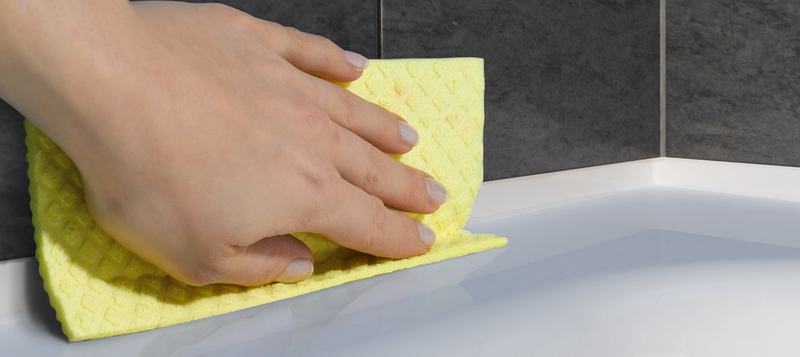
The steel tile flange ensures a permanently watertight wall connection with excellent hygiene, minimal maintenance and clean aesthetics – all without a silicone joint.
Well protected and pleasantly quiet#
A high-quality bathroom should do more than look beautiful. Water must reliably remain where it belongs, while bathing and showering noise should spread through the building as little as possible. Two Swiss standards play an important role here.
SIA 271/1
The SIA 271/1 standard, “Waterproofing of buildings – Interior spaces”, addresses protection against moisture. It governs the planning and execution of waterproofing in bathrooms, showers and other wet rooms, with particular attention paid to transitions between the wall, floor and bathtub or shower tray.
At this sensitive transition, the Schmidlin steel tile flange creates a connection that is protected by design. Together with Schmidlin sealing tape, it can be professionally integrated into the bathroom’s waterproofing layer. This means that the visible connection between the tub and the wall is not the sole means of waterproofing. For an overall solution that complies with the relevant standards, all components must be planned and coordinated to suit the specific construction situation.
SIA 181
While SIA 271/1 ensures professionally planned waterproofing, SIA 181, “Sound insulation in buildings”, focuses on peace and quiet. Splashing water and structure-borne noise can travel through walls and floors into adjoining rooms.
To meet the stricter requirements of SIA 181, Schmidlin tile flanges are always installed with Schmidlin sealing tape and the matching tile flange mounting brackets. The use of a Schmidlin installation system matched to the bathtub or shower tray is also recommended. Together, the product and installation system form a well-designed unit for improved sound insulation and greater living comfort.
Conclusion
Permanently watertight – without a silicone joint
Depending on the model, Schmidlin bathtubs, shower trays and shower areas are available with or without a tile flange. Versions with tile flanges on one, two, three or four sides, shortened tile flanges and individually made partial tile flanges provide solutions for a wide range of bathroom situations.